GLAMAVERA JOURNAL · STYLE GUIDE
Quality bracelet and ring stacks do not need an extravagant budget. They do, however, benefit from a little thought. The most elegant stacks are rarely made by buying every piece at once. They grow around a few dependable designs: a bracelet you wear repeatedly, rings that work with your hands and finishes that still feel right when the trend has moved on.
If you are starting to invest in your jewelry collection, the goal is not to create the biggest pile of accessories. The goal is to build a small, flexible wardrobe of jewelry that can finish a simple outfit, elevate evening dressing and still feel like you on an ordinary day.
Start with quality, not quantity
A good stack begins with information. Before looking at how many pieces you can buy, look at what each piece is made from, how it is finished and whether the product page explains its care. Clear material information helps you compare designs honestly. It also gives you a better idea of how a piece fits into the rest of your collection.
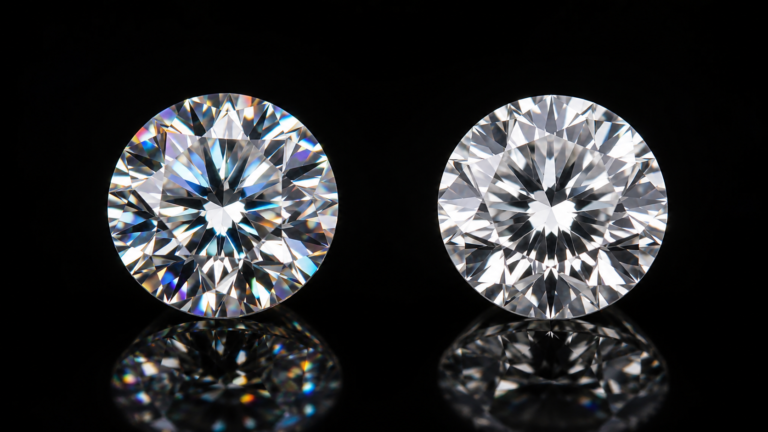
For everyday jewelry, a 925 sterling silver base can be a practical foundation. A gold-plated finish gives the same design a warmer direction, while a silver finish creates a cooler and more minimal effect. Moissanite can add brightness and movement, especially when you want sparkle without making every piece in the stack compete for attention.
Price is only one part of quality. A piece becomes more valuable when you can imagine wearing it with several outfits, when the proportions feel comfortable and when the design does not depend on one short-lived trend. Ask yourself three simple questions: Will I wear it next month? Does it work with what I already own? Would I still choose it without the styling photo?
Build the stack around one anchor
The easiest way to create a polished bracelet stack is to choose one anchor first. This is the piece that gives the look its direction. It might be a continuous line of stones, a station bracelet with repeated details or a clean chain with a stronger silhouette. Once the anchor is chosen, the other pieces should support it rather than compete with it.
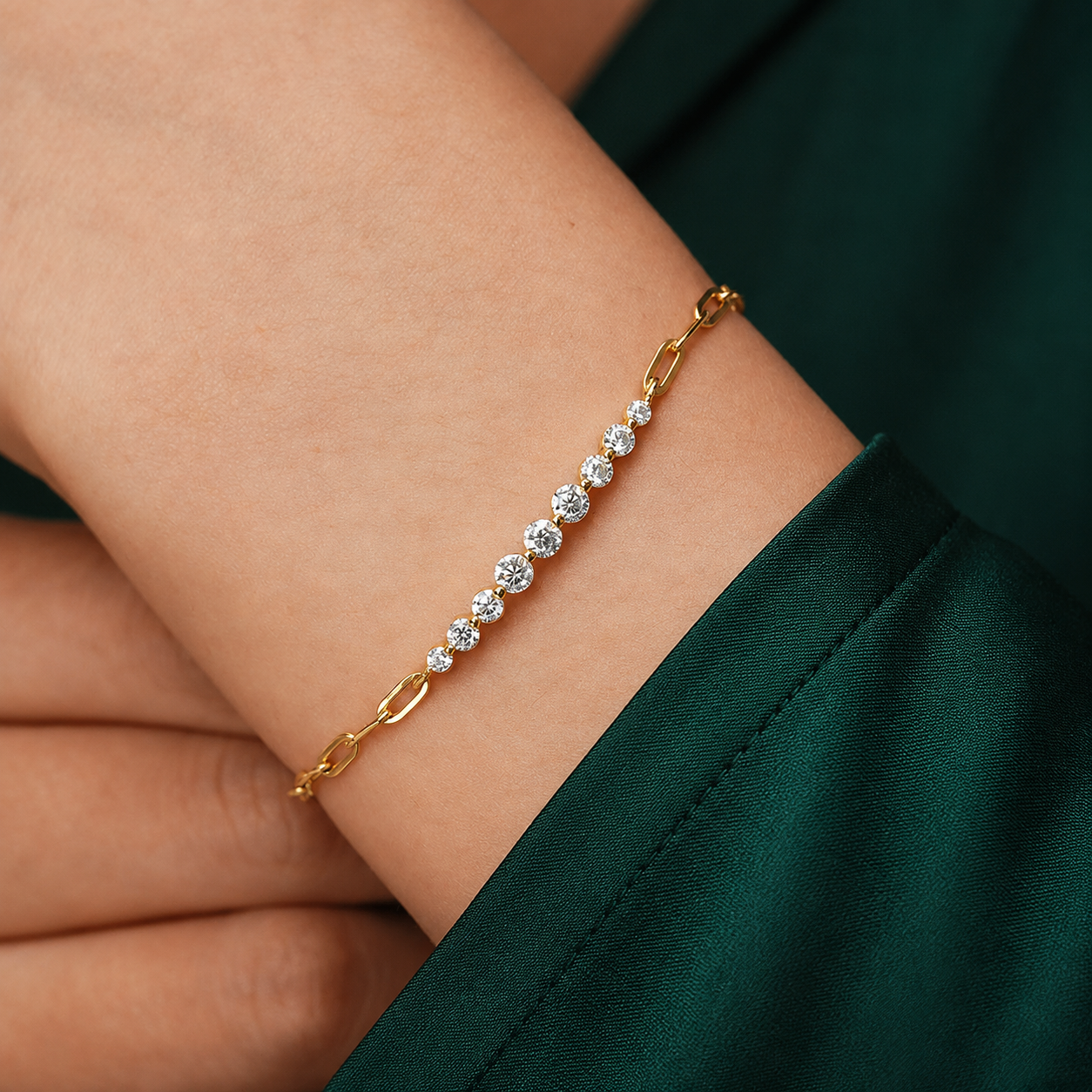
Le Kessane Bar Bracelet in gold is a useful example of an anchor design. Its moissanite line creates the sparkle, while the paperclip-inspired chain gives the bracelet a more modern outline. The gold version uses a 14K gold-plated 925 sterling silver base. If you prefer a cooler look, the Kessane silver version offers the same styling idea in a silver finish.
From there, you can explore the wider GLAMAVERA bracelet collection and choose a second piece with a quieter rhythm. A slim station bracelet can soften a stronger tennis-inspired design. A smooth bangle or a watch can create structure. The important point is to add one clear layer at a time.

Use contrast without creating clutter
A stack looks intentional when the eye can understand it quickly. Contrast helps with that. Combine a brighter piece with a calmer texture, or pair a more structured bracelet with a delicate chain. Repeating one detail across the stack—such as a warm finish, a silver tone or a similar stone shape—keeps the look connected.
Mixing gold and silver can also work well, but it usually looks strongest when the second metal appears somewhere else. For example, a gold bracelet can sit beside a silver watch, while a ring or earring repeats one of those tones. This creates a deliberate connection instead of making the combination look accidental.
Comfort matters just as much as appearance. A bracelet that catches on clothing, twists constantly or feels too tight will not become part of your everyday wardrobe. Leave enough space for natural movement and choose an adjustable design when you are unsure about fit. A beautiful stack should be easy to wear, not something you have to keep correcting.
Let the rings make the look personal
Rings give a stack its personality because they introduce shape at the hand. You do not need five rings on every finger. Start with one ring that has a clear form—a signet-inspired shape, a smooth band or a stone setting—and add one or two slimmer bands around it. The visual pause is important; empty space can make the pieces you are wearing look more considered.
Keep the proportions balanced. If the bracelet is delicate, a very large ring may become the only thing people notice. If the bracelet is more luminous, smaller rings can create a softer transition. You can also repeat the same metal tone across the wrist and hand for a clean editorial effect, or use one contrasting ring as the detail that makes the outfit feel individual.
The best collection does not look as if it was purchased in one afternoon. Different pieces can belong together because they share a mood: polished but not loud, feminine but not overly sweet, refined but still easy to wear with denim, knitwear or a simple white shirt.
A practical formula for everyday stacking
When you want a reliable combination, use this four-step formula:
Let one bracelet or ring carry the main sparkle.
Use a slimmer chain, a smooth band or a watch to create contrast.
Match the metal tone, stone mood or overall softness somewhere else.
A stack is finished when another piece would make it less comfortable or less clear.
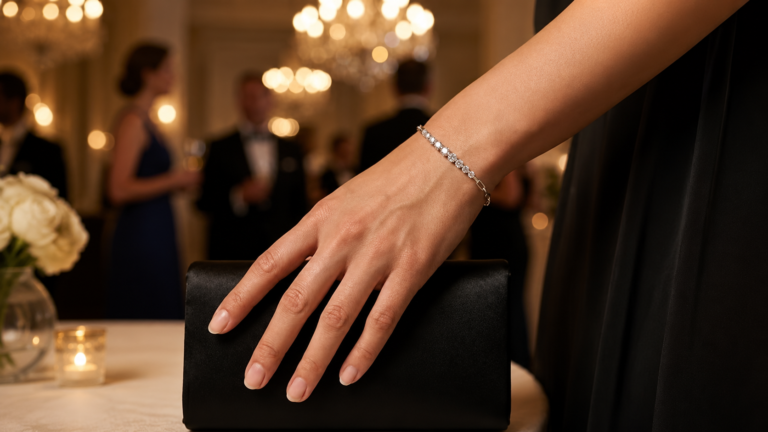
For daytime, two or three coordinated pieces are often enough. For dinner or an occasion, you can increase the brightness by letting one line of stones stand alone and keeping the rest of the outfit simple. Jewelry works best when it has room to be seen.
What to check before you buy
Read the product details before you rely on the photograph. Check the material, finish, stone description, closure and available adjustment. If a product includes a size or extension chain, make sure it suits the way you want to wear it. If you have sensitive skin, look for clear information about skin-friendly construction and avoid assuming that every finish will feel the same for every person.
It is also worth checking the brand’s delivery, return and care information. A professional product page should help you understand what you are buying before you pay. That transparency is part of the shopping experience and can be more valuable than a small discount on a piece you will not wear.
At GLAMAVERA, the Halvane Station Bracelet is designed around three pavé bar stations on an adjustable chain. The product information lists a 925 sterling silver base, silver or 14K gold-plated finishes and an adjustable 16.5 cm chain with a 5 cm extension. Those details matter because they tell you how the bracelet can work as a delicate layer rather than asking you to guess from a photograph.
Care for the pieces you wear most
Even a well-chosen stack needs simple care. Keep jewelry away from perfume, hairspray, harsh cleaning products and chlorinated water. Remove bracelets and rings before swimming, showering, exercise or manual work when the product care guidance recommends it. After wearing, wipe away moisture and store pieces separately so chains do not tangle and harder surfaces do not rub against one another.
Care is not about treating jewelry as untouchable. It is about protecting the finish and keeping the pieces ready for the next outfit. The more often a piece is worn, the more useful it becomes—provided it is stored and cleaned thoughtfully.
Questions readers often ask
How many pieces should a beginner buy?
Start with two or three pieces that can be worn together and separately. This gives you more combinations than buying a large set that only works one way.
Is it better to match every metal?
Not necessarily. Matching creates a calm look, while mixing can feel modern. Repeat the second metal somewhere else so the contrast looks intentional.
Can a bracelet stack be elegant and affordable?
Yes. Focus on clear materials, wearable proportions and designs that suit several outfits. A practical piece you wear regularly can be more valuable to your wardrobe than a dramatic piece that stays in its box.
What makes a ring stack look expensive?
Balance. Combine one stronger shape with slimmer pieces, leave breathing room and keep the finishes visually connected.
Ready to build your collection? Start with the GLAMAVERA bracelet collection, compare the Halvane and Kessane designs, and continue exploring the Journal GLAMAVERA for more styling, materials and care guides.